
 ПН - ПТ 8:00-18:00


Oxygen (О2)
-
Basic info:
-
English name
Oxygen
-
CAS
7782-44-7
-
Hazard info
1072; 1073
-
Transport
"ADR Class 2, 1A"
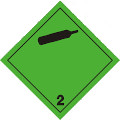
Subclass 2.2
Properties:
-
Molar mass
31.9988
-
Gas density at 15°С/1,013 bar
1.354
-
Boiling point at 1,013 bar
-182,98⁰С
Options
- single-piece
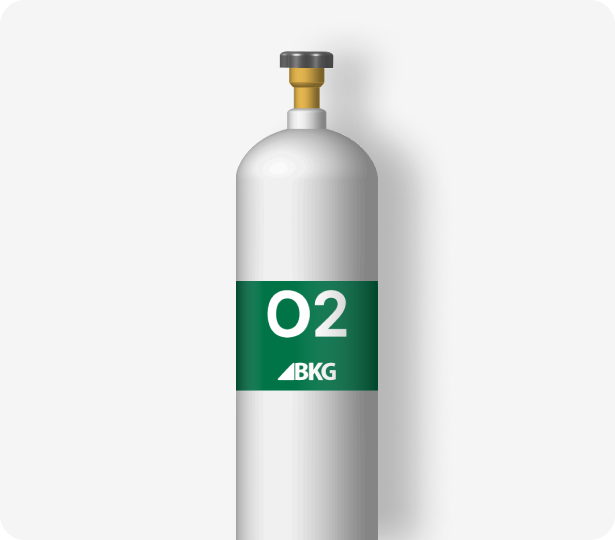
5 l10 l40 l — 150 bar
50 l (200) — 200 bar
- Monoblock(s)
12 × 50 l (200/300) — 200 bar
12 × 50 l (200/300) — 300 bar
- Cylinder(s) 5 l, 10 l, 40 l, 50 l and monoblocks ( DIN 9 (G 3/4)) DIN 9 (G 3/4)
Brass two-stage for clean gases
Specs
| Oxygen 3.5 | Oxygen 5.0 | Oxygen 5.5 | Oxygen 6.0 | ||
|---|---|---|---|---|---|
| Composition | |||||
| O2 | % | ≥99,95 | ≥99,999 | ≥99,9995 | ≥99,9999 |
| Admixture | |||||
| N2 | ppmv | - | - | <1,3 | <0,2 |
| Ar | ppmv | - | - | - | <0,2 |
| CO | ppmv | - | - | <2 | - |
| CO2 | ppmv | <15 | <1 | <2 | <0,1 |
| CnHm | ppmv | <15 | <1 | <1 | - |
| H2O | ppmv | <9 | <5 | - | <0,2 |
| N2+Ar | ppmv | <450 | <7 | - | - |
| TCH | ppmv | - | - | - | <0,1 |
| H2 | ppmv | - | - | - | <0,1 |
Oxygen (Oxygenium) is the most common chemical element on Earth. Almost half (49%) of the Earth's crust and a fifth (21%) of the atmospheric air volume consist of oxygen. This substance is part of water, plants and all live organisms. Also, oxygen is part of the vitally important elements, such as proteins, fats and carbohydrates. Oxygen is key for gas metabolism: breathing and oxidation.
Currently, there are three ways to produce pure oxygen: chemical (used in laboratory conditions), water electrolysis, and the oxygen also is obtained from air separation..
- Gas without color
- taste
- and smell
- Heavier than air
- Slightly soluble in water
- At -183 degrees Celsius
- it turns into a mobile blue liquid
- Freezes at -219°C.
- Non-toxic
- non-flammable
- non-explosive
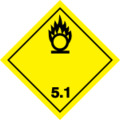
- But! Oxygen is a strong oxidizer
- so it greatly enhances the combustibility of other substances.
Pure oxygen in gaseous and liquid states is used in various industrial fields:
- In electronics manufacturing. Oxygen is used to produce semiconductors and make optical fiber;
- In the production of measuring and laser equipment;
- Oxygen may be used for scientific purposes;
- The gas is used in food production;
- In the chemical industry;
- Oxygen is used in medicine as a component of respiratory mixtures;
- In the oil and gas sector;
- In the metallurgy industry, oxygen is used for oxy-fuel welding, plasma and laser cutting, and soldering;
- Oxygen is used as a component in gas calibration mixtures.
 Oil and Gas
  Chemical industry
  Electronics
  Power industry
  Analytics
  Car industry
  Medicine
  Research
  Metallurgy
 Can be transported by
- train
- truck
- ship